
Gorse & Rush shares practical, down-to-earth guidance on uk countryside walks and wildlife for readers across the UK.
- 0123456789
- Angle Bd Abdelmoumen & rue soumaya, Résidence
- [email protected]
Gorse & Rush shares practical, down-to-earth guidance on uk countryside walks and wildlife for readers across the UK.
 By Emily Hartley
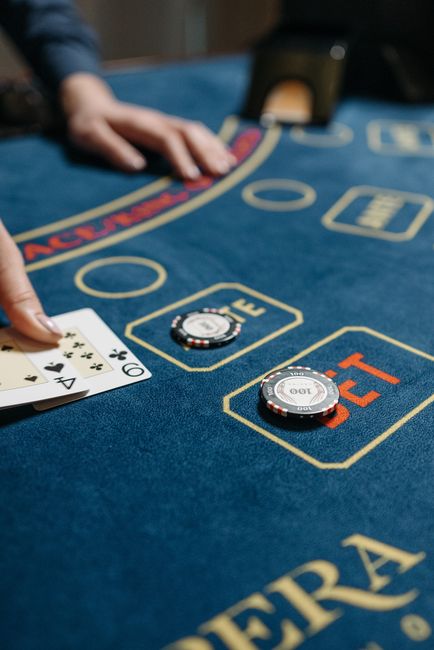
Every casino floor tells the same story in two languages. One player is chasing a hunch, doubling bets after every loss, convinced the universe owes them a payout. Another is calmly tracking session limits, sizing bets to bankroll, and walking away at the target number. Both might hit the same jackpot tonight. Only one of them will still have money next month. The gap between those two players is the entire game — and it has almost nothing to do with luck.
Here's the uncomfortable truth: iGaming is one of the few recreational activities where the math is completely transparent, widely published, and still ignored by roughly everyone at 2 a.m. That transparency is actually an advantage. Once you understand what house edge, variance, and expected value really mean, you stop treating a losing night as betrayal and a winning night as genius. You start treating the whole thing like a hobby you control instead of a mood that controls you.
Every casino game has a built-in margin for the operator. It's not a scam; it's the business model. What matters is how big that margin is and whether the game gives you enough entertainment value to justify it.
Roughly, here's what you're up against per game:
Notice what that list does to the classic casino marketing pitch. The slot machine flashing the biggest jackpot in the room is usually the most expensive game to play. The table where the action looks slowest and most boring is often the cheapest. If you care about how long your bankroll lasts, that's the tradeoff staring you in the face.
Slots are engineered for emotional pacing, not for fair comparison. Modern video slots run on RNGs that spin thousands of times per second, but designers layer in near-misses, expanding wilds, free-spin trailers, and cinematic win sequences to keep you engaged through the dry stretches. A game with 96% RTP isn't lying to you — it's just that 4% of every wager is skimmed off across millions of spins, and your session is a tiny slice of that curve.
That's why slot sessions feel more volatile than blackjack. They usually are. High-volatility slots can go 200 spins without a meaningful hit and then hand you 400x in one drop. Low-volatility slots pay small and often. The RTP might be identical. The experience is not.
If you're picking a slot, do three things:
Here's where the debate between casino gambling and poker becomes almost silly. Slot players gamble against a fixed, known mathematical edge. Poker players gamble against each other while the house rents them a table. The rake — typically 5% capped somewhere between $3 and $6 in a live low-stakes game — is just the cover charge. สล็อต offers a practical breakdown of the topic.
That means poker is the only mainstream casino game where long-term profit is actually achievable through skill. But it also means you can't blame the cards. Bad players do. Good players review hand histories, study bet sizing, and track whether their win rate in big blinds per 100 hands (bb/100) is actually positive over a 10,000-hand sample.
A few reality checks for anyone wandering from slots to poker:
Sports betting flips the logic again. Unlike slots, where no amount of research changes the underlying probability, betting markets can be beaten if you know something the price doesn't. The vig — usually around 4%–5% on a standard two-way line — is the tax. Long-term profit means beating that tax by enough to make the whole exercise worthwhile.
The most common mistake isn't picking losers. It's picking winners at prices that don't compensate for the risk. A 70% winner sounds great until you notice you were betting -300 favorites all season. Value, not accuracy, is the metric that keeps bettors solvent.
The practical habits that separate decent bettors from donation artists:
None of this matters if the session budget disappears in 20 minutes. The unsexy mechanics of iGaming are where most players quietly fail. Set a loss limit before you log in, not after. Use deposit limits and time-out tools offered by licensed operators — they exist, they're free, and most people never touch them. Treat bonuses as conditional offers, not free money. Wagering requirements of 35x on a 100% match bonus mean you might need to wager thousands before a single cent is withdrawable.
And pick licensed operators. This isn't moralizing. Licensed platforms publish RTPs, submit to independent audits, and can't ghost you on a withdrawal without consequences. That single decision filters out most of the nonsense.
The best iGaming players aren't the ones who win the most. They're the ones who understand exactly what they're buying with every wager — a certain amount of entertainment at a known price. Slots sell spectacle with a steep tax. Blackjack and baccarat sell near-fair coin flips. Poker and sports betting sell the possibility of an edge, if you're willing to work for it. Choose the product that matches what you actually want, check the numbers behind it, and set boundaries while you're still thinking clearly. Everything else is just a hot streak waiting to feel like skill.


We are not gonna make spamming
