
Gorse & Rush shares practical, down-to-earth guidance on uk countryside walks and wildlife for readers across the UK.
- 0123456789
- Angle Bd Abdelmoumen & rue soumaya, Résidence
- [email protected]
Gorse & Rush shares practical, down-to-earth guidance on uk countryside walks and wildlife for readers across the UK.
 By Oliver Pemberton
Long before the clocks change, the British countryside begins to wake. From mid-January, snowdrops push through leaf litter in churchyards, old estate gardens and damp woodland edges. Look for their nodding white heads on mild, still days; in bitter cold they stay closed, so timing your walk after a spell of rain pays off. Winter aconite, with its buttercup-yellow cup, often flowers alongside, especially on chalky soils. I keep a simple rule: if the ground is not frozen and the air smells of damp earth, it is worth a look.
This is the perfect month to start a notebook. Record the date, a grid reference or a clear description of the spot, the weather, and how many clumps you see. A single snowdrop is a promise; a page of them is a pattern. You will quickly learn that south-facing banks flower a week or two earlier than north-facing ones. That small observation, repeated over years, turns a pleasant stroll into real natural history.
March to May is the busiest season for British wild flowers. Wood anemones open first, followed by lesser celandine, then the famous bluebell. Native bluebells have narrow, drooping bells on one side of the stem and a sweet scent; Spanish bluebells are paler, upright and unscented. Visit ancient woodland — those with a mix of oak, ash and hazel — before the leaf canopy closes and shades everything out. Wild garlic, or ramsons, fills damp hollows with a sharp green smell that you will notice before you see the white star flowers.
In hedgerows, look for primroses, violets and early purple orchids. Keep your notebook practical:
Do not trample the carpets. Stay on paths, and use a hand lens for tiny flowers like moschatel, also called townhall clock.
June brings oxeye daisies, yellow rattle, common spotted orchids and, on chalk downland, the bee orchid. Roadside verges are often the best accessible meadows, especially where councils cut late. Yellow rattle is the meadow maker — it weakens grasses and lets wild flowers through. Look for it in traditional hay meadows, which are cut once in late summer. If you see a field with a riot of colour, that is a sign of low fertiliser and old management.
Orchids can be shy. The common spotted orchid likes damp, calcareous grassland; the bee orchid prefers dry, disturbed ground. Check flower spikes early in the morning before the heat makes them wilt. Your notebook should include a simple abundance scale: one or two plants, scattered, frequent, or abundant. That is more useful than a long list with no numbers. Write what you see, not what you expected to see.
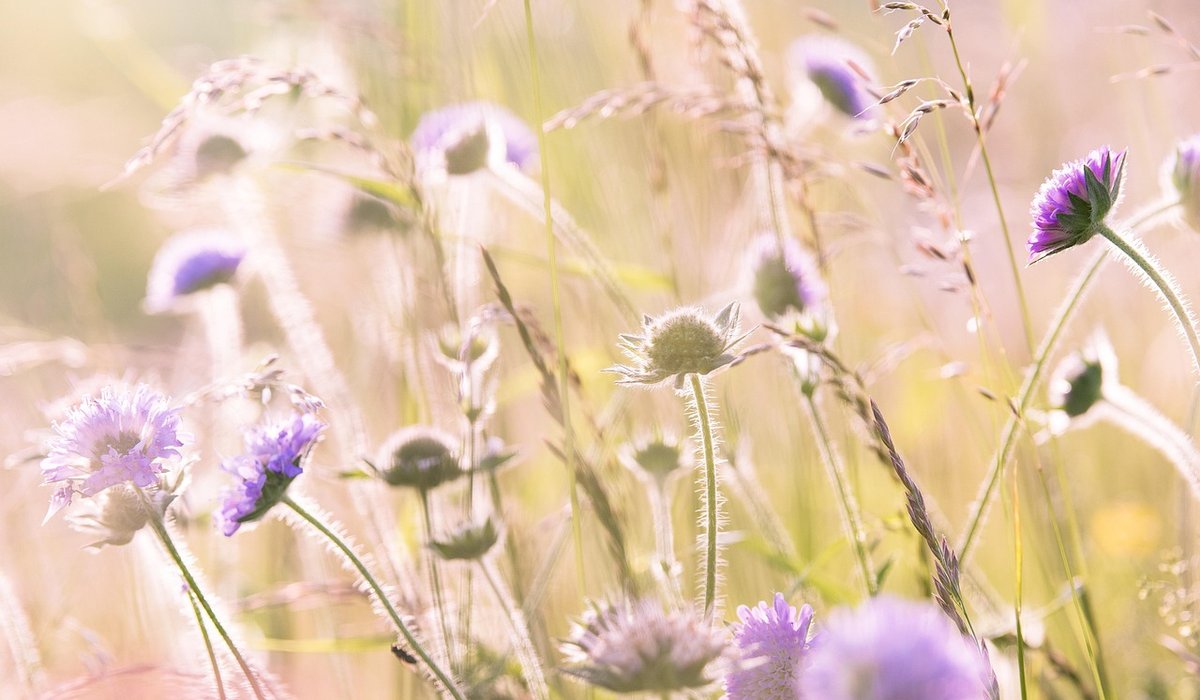
July and August are for knapweed, field scabious, wild marjoram, and the first harebells on breezy hillsides. Butterflies and bees are everywhere, so add a few pollinator notes. Which flowers attract the most gatekeepers or meadow browns? Marjoram is a favourite for small tortoiseshells. Coastal cliffs, railway cuttings and old quarries often hold surprising diversity because they are left alone.
Heat and drought change everything. After a dry spell, flowers may be smaller and finish sooner. After rain, you get a second flush. Note the date of the first ripe seeds — that tells you when to return next year. Do not ignore the 'weeds'. Ragwort, thistles and nettles feed a huge range of insects, and their flowers are worth a second look.
September and October bring harebells, devil's bit scabious, autumn gentian and meadow saffron. Harebells are delicate, papery blue bells that tremble in the slightest wind. Look for them on limestone grassland, moorland edges and sand dunes. Devil's bit scabious is a late nectar source for bees and butterflies, so it is worth watching for a while. Autumn gentian is small and easily missed; get down low and scan the short turf.
Record the first frost date in your notebook. It marks the end of the flowering year for many species. Note which plants are still green, which have set seed, and which have vanished entirely. This is the time to review your pages and see the whole arc: snowdrops to harebells. Autumn is not an ending; it is the ledger of the year.
You do not need fancy equipment. A small waterproof notebook and a pencil will do. Go for the same walk once a week, or once a month, and write down the same things: date, place, weather, habitat, species, abundance, and one thing that surprised you. Use a hand lens for tiny flowers, and take a photograph only if it helps you identify later — but write first. The act of writing fixes the memory.
Over a year, you will build a personal calendar of British wild flowers. You will know exactly when to expect the first snowdrop on that churchyard bank, and when the harebells will appear on the moor. That knowledge is quiet, local and deeply satisfying. One notebook, one walk, one year — and the countryside becomes a story you can read.


We are not gonna make spamming
